
一吻定情
China turns ancient TCM wisdom into high-tech personalized skincare_我的网站

一 | (ECNS) -- The Beijing Economic-Technological Development Area, also known as Beijing E-Town, has emerged as a major destination for AI investment, with several companies securing funding worth billions of yuan this year. In the first half of the year, eight leading AI companies based in Beijing E-Town raised more than 15 billion yuan ($2.1 billion), spanning fields including world models, AI chips and AI-generated content, the official data released by the E-Town shows. AI video and world-model developer AIsphere recently completed its Series C funding round, raising a total of 2.98 billion yuan ($414 million). The funding will support the development of its video-generation foundation models, real-time world models and industrial applications, according to news released by the E-Town. Automotive chipmaker SemiDrive Technology completed a Series C funding round worth nearly $100 million in May. World-model company VAST secured more than 1 billion yuan ($139 million) in strategic investment in July, bringing the total raised in its Series A funding rounds to nearly 3 billion yuan ($417 million). During the 14th Five-Year Plan period (2021–2025), Beijing E-Town established government-guided funds totaling about 20 billion yuan ($2.8 billion). It has also recently launched four new industrial investment funds with a combined value of 20 billion yuan, including an 8-billion-yuan fund focused on AI and integrated circuits. Beijing E-Town said during the 15th Five-Year Plan period (2026–2030) it will continue to expand support for AI development across the entire industry chain, from computing infrastructure and algorithms to models and applications. (By Helen Mo, intern Liu Shuangjing) 
 。
。
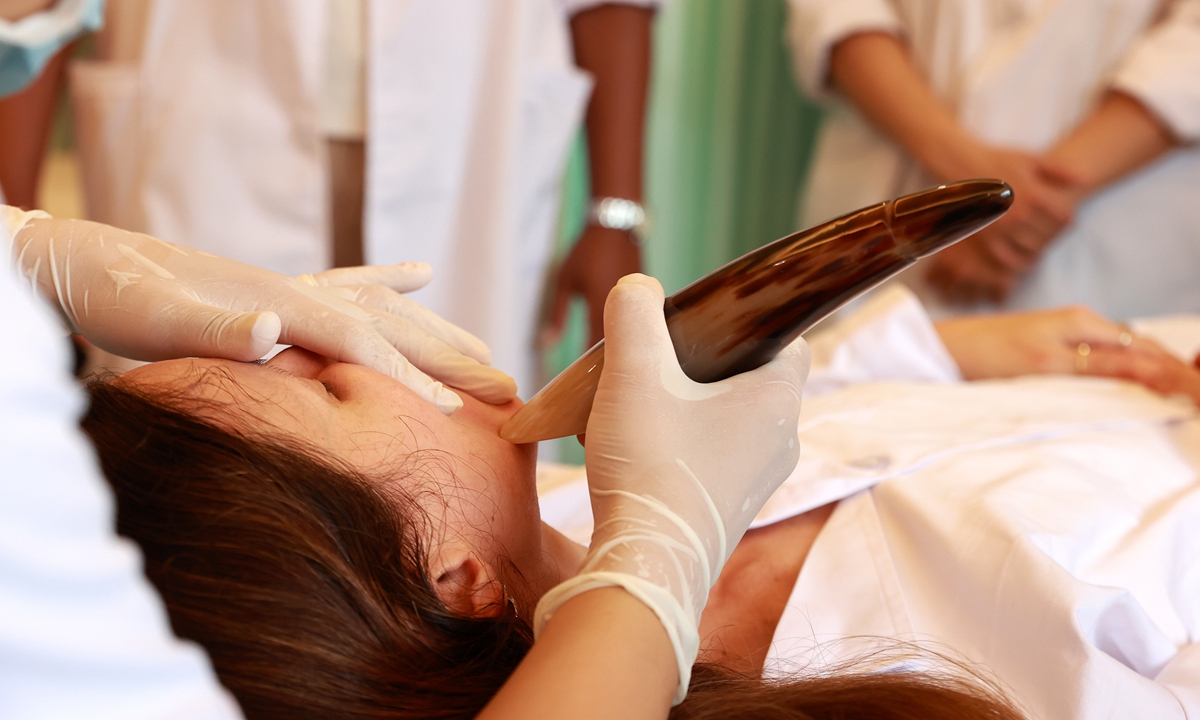
Starting in August, eight provincial-level regions will join the second phase of the program, bringing the total number of participating provinces and regions to 23, according to the National Medical Products Administration.
Under the pilot program, cosmetic registrants and authorized domestic entities can provide personalized services by mixing or dispensing two or more cosmetics in small batches based on consumers' individual needs.
At the Beijing Tong Ren Tang personalized cosmetic service skincare experience center, for example, a skin analysis can assess more than 30 indicators and generate a personalized skincare plan, based on which consumers can order tailored products, according to the People's Daily.
Twenty-four-year-old Beijing resident Zhao Xiyao was among the early consumers to experience the service. She told the Global Times on Sunday that when buying skincare products in the past, she relied largely on the brand's advertising or online "ingredient reviews." Even when she knew what problems her skin tended to develop, it was still difficult to determine which products were truly right for her.
"Compared with simply buying a bottle of skincare product, I care more about the skin analysis that comes before the personalized service," she told the Global Times. "At least it first tells you what condition your skin is in, and then selects products based on that condition, rather than having everyone use the same set of products."
For Zhao, the appeal of the experience goes beyond the novelty of the word "personalized."
"If it's just about changing the packaging or putting my name on it, I don't think that means much. What really makes it valuable to me is whether it can actually make a difference based on my individual situation," she said.
The idea of tailoring skincare to individual needs, however, is not entirely new. It echoes the traditional Chinese medicine (TCM) principle of taking individual differences into account.
Yi Lan, a TCM physician practicing in South China's Guangdong Province, told the Global Times that people with the same skin concerns may need different approaches because of differences in their constitutions, lifestyles and living environments.
However, she noted that TCM diagnosis and modern personalized cosmetics are not the same: The former involves a comprehensive assessment of an individual's overall condition, while the latter mainly matches products to skin conditions and consumer needs.
For personalized skincare, the key lies in whether this matching process can deliver meaningful results.
"If personalized services are to become a lasting consumer service, the key will be 'precision,'" Yi said. "The test results must be reliable; otherwise, the plan that follows has little meaning."
According to Yi, if ordinary products are simply combined in a different way without being able to explain why that combination is suitable for a particular person, then "personalization" can easily become a marketing concept.
At its core, personalized skincare is less about making a product more complicated than about making the choice more relevant to the person using it. Technology is giving the traditional idea of taking individual differences into account a new expression in the consumer market. However, the real test is whether it can translate into products that are genuinely better suited to the individual.
。

二 |
Current article:http://qiangxinshuliachepancui.sbs/list_h8epywc/beppwpp.html
Published on:07:42:16
下一篇:Exhibition hall for China's language resources protection project opens in central China’s Changsha
 东契奇里夫斯盼复仇 湖人下赛季首战将对阵雷霆
 Iran sentences 2 journalists for collaborating with US. Both covered Mahsa Amini's death
 拉文:森林狼老将告诉我 永远不要给潜能设限
 海峡两岸(福建)书院文化交流活动在厦启动
 火箭媒体人:乌度卡是NBA前十的教练 火箭能在他带领下夺冠
 江西宜春纪委回溯调查:3名公职人员酒驾牵出3场酒局_上高县_黄小云
- ·The horror as Israeli authorities show footage of Hamas atrocities: Reporter's Notebook
- ·'China Is Awesome': Elon Musk recommends visiting China
- ·경산서 실종 中유학생 살해 피의자, 여장한 채 동대구역까지 이동
- ·马克西:只要球队能赢 我不会计较场均得分
- ·财政部、应急管理部再次预拨6000万元中央自然灾害救灾资金
- ·Google宣布Android 13 Go Edition 相关设备将于2023年到来
- ·Kimi K3风暴第四日:月之暗面黄震昕回应争议,中国开源大模型打响定价权突围战
- ·新款大众ID.3/ID.4将于2026年发布 采用ID.2all概念车设计语言
- ·新闻连环画 | 追光爷爷
- ·MIT的cMaSK技术将评估口罩对个人用户的适合程度
- ·英国推出的小米混合3:6128GB,价格4334元
- ·HTC没有遗憾。
- ·曹庄镇:以环境之美提升村民幸福指数
- ·A股收评:超4200只个股飘红,沪指收涨,深指、创业板指收跌,A股收评:超4200只个股飘红,沪指收涨,深指、创业板指收跌
- ·Anil Sharma Reveals Fate of Dharmendra, Sunny Deol and Bobby Deol Starrer Apne 2
- ·Eugenix Hair Sciences: Where Science Meets Art in Hair Restoration
- ·Meta驳斥FTC观点:收购Within无法垄断VR领域
- ·银联APP年度账单:消费总额XXX元
- ·台风“沙德尔”睁眼,环流庞大,直径约1000公里,可能继续靠近我国,不排除登陆东南沿海的可能性
- ·你的车险信息如何成了别人的“买卖”?
- ·China-Europe freight trains gain momentum as Erenhot port handles 3,000th trip of year
- ·推进山洪沟治理 提升防汛减灾能力
- ·대법, '서부지법 폭동' 5명에 11억 손배소 제기..."법원 귄위 심각 훼손"
- ·芯片卖了56万片之后,阿里平头哥把最值钱的东西开源了
- ·Man convicted of stealing sports camp tuition funds from hundreds of families
- ·美丽中国河北行|在七里海,来一场康养游
- ·美国众议院硬闯关:强行推动对以色列武器输送,拜登警告无效!
- ·温州首发“弓头”票:过路时看手机10元罚款
- ·沈铁梅:“哈哈腔”为何能成为《白蛇下山》的点睛之笔?
- ·广州大学城词元·智能体联合创新工坊启动,广州大学城词元·智能体联合创新工坊启动
- ·消息人士称,瑞生咖啡将赴香港上市:正在准备上市文件
- ·Nato to boost Ukraine's missile defence
- ·韦东奕个人账号39.8元练习册下架,客服称“迫于压力下架”不实,“韦东奕图书”仍在售该产品,韦东奕堂哥称店名获其本人授权
- ·国家统计局:1—7月份我国投资新动能增势良好
- ·官方:中国女篮将开启高原训练,要求4周内完成1万次投篮
- ·市委召开党建工作会议
- ·星耀雄安丨 ① 首颗“雄安造”卫星搭乘朱雀三号重复使用遥二运载火箭成功发射入轨
- ·华硕发布了rgb背包“失落的家庭之眼”:背负背包风很大
- ·县领导到县委党校调研
- ·苹果iOS 12.1.3开发者预览版/测试版4